Understanding Women’s Heart Health
Heart disease remains a leading health concern for women, yet it is often misunderstood or underrecognized. During the Heart to Heart: Ask the Experts panel discussion, moderator Amber Belzer led a conversation with cardiologist Dr. Tara Sedlak, Dr. Ramneek Dosanjh, Dr. Rachel Ollivier, Dr. Angela Liu.
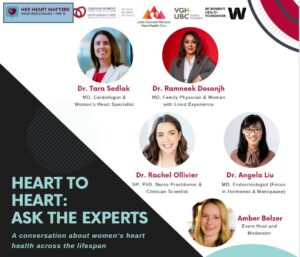
A Conversation about Women’s Heart Health Across the Life Span
Together, the panel explored how cardiovascular disease presents differently in women, how risk evolves throughout life, and why both biological and social factors must be considered when addressing women’s heart health.
How Heart Disease Differs in Women
Dr. Tara Sedlak began by highlighting three key areas where heart disease differs between men and women: risk factors, clinical presentation (symptoms), and underlying causes.
Some traditional risk factors affect women more strongly. Women with diabetes, for example, have a two- to four-fold higher risk of heart disease compared with men with diabetes, and smoking also increases cardiovascular risk more in women than in men.
Dr. Sedlak also emphasized sex-specific risk factors that historically received less attention in research because studies focused primarily on men. These include complications during pregnancy, such as high blood pressure, gestational diabetes, or preterm labor, as well as conditions like polycystic ovarian syndrome (PCOS) and early menopause before age 40.
Although chest pain remains the most common symptom of a heart attack for both men and women, the experience can differ. Women may describe tightness rather than pressure, which can sometimes be mistaken for asthma or anxiety. Pain may also radiate more often to the jaw, arms, or back, occasionally leading patients to seek care for other concerns before heart disease is recognized.
Dr. Sedlak also noted that the cause of a heart attack can differ. While most are related to blocked arteries, about 10% of women experiencing a heart attack show no blockages on angiography. In these cases, causes may include coronary artery dissection, coronary vasospasm, or dysfunction in the heart’s smallest blood vessels.
Protecting Heart Health at Every Stage of Life
Dr. Rachel Ollivier discussed how heart health strategies should adapt across the lifespan.
Many preventive habits are consistent throughout life: quitting smoking, limiting alcohol, exercising regularly, and maintaining a healthy diet. Current recommendations include 150 minutes of moderate-to-high intensity physical activity per week and a Mediterranean-style diet emphasizing proteins, fruits, and vegetables.
Stress management also plays an important role. Dr. Ollivier emphasized the strong connection between the brain and the heart, noting that anxiety and chronic stress can influence cardiovascular health.
As women enter the perimenopausal transition, muscle-building exercise becomes especially important for maintaining metabolism and supporting both heart and bone health.
Sleep is another key factor. Sleep disruptions related to hot flashes, night sweats, or postpartum life stages can affect cardiovascular health. Screening for sleep apnea, which is often underdiagnosed in women, may also help identify an important risk factor.
Pregnancy can provide additional insight into future risk. Conditions such as gestational diabetes, preeclampsia, and gestational hypertension are associated with a two- to three-fold increased risk of cardiovascular disease later in life, making pregnancy a valuable “window” into long-term heart health.
Hormone Therapy: What We Know
Dr. Angela Liu addressed a common question about the role of hormone therapy after menopause.
In general, hormone therapy is not recommended to prevent heart disease. One exception is women who experience premature or early menopause before age 45, for whom physiologic hormone replacement may help reduce the risk of early coronary disease.
For women reaching menopause at the typical age of around 50 to 52, large studies, including the Women’s Health Initiative, found that hormone therapy does not reduce the risk of developing heart disease. Its primary use remains the treatment of menopausal symptoms such as hot flashes and night sweats.
When Heart Disease Doesn’t Fit the Typical Profile
Dr. Ramneek Dosanjh shared her own experience with a cardiac event in 2024. Despite being a competitive athlete, vegetarian, and having none of the traditional risk factors such as high blood pressure or high cholesterol, she experienced a severe cardiac episode.
Her angiogram showed no visible coronary disease, yet her cardiac markers were significantly elevated, accompanied by severe back and shoulder pain.
The experience prompted her to explore the connection between intimate partner violence (IPV) and cardiovascular health. The stress associated with IPV and coercive control, she noted, can contribute to cardiovascular risk and remains underrecognized in healthcare settings.
Dr. Dosanjh emphasized that screening for safety and well-being should be part of comprehensive care and encouraged women to pay attention to subtle symptoms rather than dismissing them.
Key Questions from the Audience
During the audience Q&A, panelists addressed several important topics, ranging from emerging research to practical prevention strategies.
Participants were encouraged to consult resources such as the Canadian Women’s Heart Health Alliance to learn more about conditions such as microvascular disease.
The panel also reviewed warning signs women should not ignore, including shortness of breath, jaw pain, and pain between the shoulder blades. Recognizing changes in fitness levels or unexplained symptoms can prompt earlier conversations with healthcare providers.
Exercise remains central to heart health. However, Dr. Sedlak noted that extremely intense training can sometimes increase the risk of atrial fibrillation in highly competitive athletes. Exercise follows a U-shaped curve. Moderate exercise is very healthy, but “super athletes” can be at higher risk for arrhythmias, specifically atrial fibrillation, because the top of the heart can enlarge from intense stress.
Other emerging areas of research include the cardiovascular effects of COVID-19, which has drawn attention to dysautonomia, including postural orthostatic tachycardia syndrome (POTS), as well as inflammation and microvascular dysfunction.
Mental health also plays an important role. Dr. Ollivier highlighted Takotsubo disease, often called “broken heart syndrome,” which can occur after severe emotional stress and is more common in women.
The discussion concluded with a reminder that prevention remains fundamental. A Mediterranean-style diet, limiting processed red meats, monitoring cholesterol levels, and understanding genetic risk factors such as lipoprotein(a) can all support long-term cardiovascular health.